
Category: Carbon Market

  • Unlocking Environmental Stewardship: Demystifying India’s Green Credit System

    Unlocking Environmental Stewardship: Demystifying India’s Green Credit System


    In a world increasingly conscious of environmental impact, India is pioneering a transformative initiative — the Green Credit System (GCS). Developed by the Indian government, this innovative approach seeks to incentivize and reward businesses and individuals for environmentally friendly practices. Let’s delve into the essence of the Green Credit System and explore how it stands as a beacon for sustainable living and corporate responsibility.

    Understanding the Green Credit System: A Paradigm Shift
    The Green Credit System is a market-based mechanism designed to recognize and promote activities that contribute positively to the environment. It establishes a framework where entities, ranging from businesses to individuals, can earn ‘green credits’ by engaging in practices that align with sustainability goals and mitigate climate change.

    How Businesses Can Leverage the Green Credit System:

    1. Financial Incentives for Sustainable Practices:
    •  Businesses engaging in activities such as afforestation, sustainable agriculture, waste management, and pollution control can earn green credits.
    • These credits translate into financial incentives, creating an additional revenue stream for businesses committed to sustainable practices.
    1. Market-Based Mechanism:
    • The GCS introduces a market-based approach, allowing businesses to trade green credits. This mechanism fosters flexibility, efficiency, and the efficient exchange of environmental benefits.
    1. Enhanced Reputation and Credibility:
    • Participation in the Green Credit System enhances the reputation of businesses, showcasing their commitment to environmental responsibility.
    • Stringent monitoring and verification processes ensure the credibility and transparency of their contributions.
    1. Access to Green Financing:
    • Actively participating in the GCS can open avenues for businesses to access green financing. Green bonds and sustainable investment strategies become viable options, providing capital for further sustainable initiatives.

    How Individuals Can Contribute and Benefit:

    1. Engaging in Eligible Activities:
    • Individuals can participate by engaging in activities like afforestation, water conservation, and sustainable practices.
    • Registering these activities with the designated authority initiates the process.
    1. Earning Green Credits:
    • Individuals earn green credits based on the positive environmental impact of their registered activities. This tangible recognition serves as an incentive for continued environmentally conscious actions.
    1. Market Participation:
    • Individuals can participate in the market by trading green credits. This introduces a dynamic where environmental contributions become a tradable commodity.
    1. Transparent Oversight:
    • Oversight by the Steering Committee ensures the integrity of the system. Individuals can contribute to a transparent and accountable environmental credit market.

    Challenges and Opportunities:

    While the Green Credit System presents immense opportunities for businesses and individuals, challenges such as effective oversight, prevention of greenwashing, and ensuring fair credit allocation need attention. Addressing these challenges will be crucial in maximizing the potential of the GCS.

    In conclusion, the Green Credit System by the Indian Government is a pioneering step towards aligning economic activities with environmental sustainability. Businesses and individuals, by actively participating, not only contribute to a greener future but also stand to benefit economically. It’s a journey where environmental stewardship meets financial incentive, creating a harmonious synergy between business growth and ecological well-being. As the GCS unfolds, it becomes a testament to India’s commitment to a sustainable and resilient future.

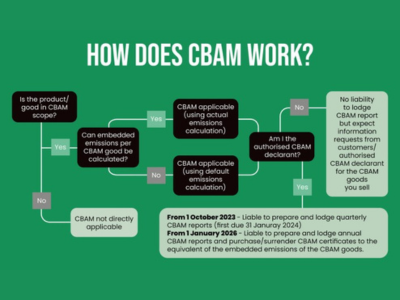
  • Unlocking India’s CBAM Potential: ESG and Scope 3 Emissions Take Center Stage

    Unlocking India’s CBAM Potential: ESG and Scope 3 Emissions Take Center Stage


    In the dynamic landscape of international trade, India is navigating the profound implications of the EU’s Carbon Border Adjustment Mechanism (CBAM) with strategic foresight and an emphasis on sustainability. Finance Minister Nirmala Sitharaman’s visionary approach, calling for inclusivity in global environmental policies, sets the tone for a comprehensive strategy that leverages Environmental, Social, and Governance (ESG) practices to address Scope 3 emissions linked to employees.

    Finance Minister Sitharaman’s Call for Inclusivity
    Minister Sitharaman has been a vocal proponent of a global environmental strategy that avoids disadvantaging developing nations. Her concerns about the imposition of a border adjustment tax by developed nations to fund green commitments highlight the need for a morally sound, collective approach. In response, India is turning to its burgeoning ESG industry as a key player in this collective effort.

    Reducing Scope 3 Emissions: A Strategic Imperative
    Scope 3 emissions, encompassing indirect emissions in a company’s value chain, take center stage under CBAM. Indian companies embracing ESG practices are proactively engaging with these emissions, employing innovative strategies to reduce their carbon footprint. This not only aligns with CBAM objectives but positions these companies as leaders in sustainable business practices.

    Innovation and Technology: The Driving Force
    India’s response to CBAM hinges on the innovative use of technology. Companies are investing in solutions that measure, analyze, and actively reduce emissions. Transportation management, waste reduction, and energy-efficient operations are areas where technology becomes instrumental in achieving sustainability goals. The ESG industry is driving the adoption of these technologies, promoting a shift towards sustainable practices.

    ESG Industry’s Role in Policy Compliance
    As India grapples with CBAM, the ESG industry acts as a guide and facilitator, ensuring that companies not only reduce emissions but also meet rigorous reporting standards. The industry’s expertise becomes invaluable in aligning corporate practices with the dynamic requirements of CBAM and other climate-related regulations.

    Unlocking Financial Pathways through Green Financing
    Simultaneously, the ESG industry in India is pioneering green financing mechanisms. Green bonds and sustainable investment strategies are gaining traction, providing companies with the capital needed to invest in sustainable practices. This financial support aids in CBAM compliance and propels India towards a greener economy.

    A Holistic Approach: India’s ESG Vision
    India’s response to CBAM reflects a holistic approach. By integrating ESG principles, addressing Scope 3 emissions, leveraging technology, and embracing innovative financing, the nation is not merely complying with international standards but actively shaping a sustainable future.

    In conclusion, as the world shifts towards sustainable practices, India, through its robust ESG industry, is poised to emerge as a leader in navigating the challenges posed by CBAM. The convergence of policy, innovation, and technology paints a promising picture of a sustainable and competitive Indian economy on the global stage.

  • Decoding CBAM: A Revolutionary Step Towards Green Trade

    Decoding CBAM: A Revolutionary Step Towards Green Trade


    In the global pursuit of a sustainable future, the Carbon Border Adjustment Mechanism (CBAM) emerges as a pivotal tool. Let’s delve into the intricacies of CBAM, understanding what it is and how it functions to reshape international trade with a green lens.

    Understanding CBAM:

    1. The Essence:
      CBAM, or Carbon Border Adjustment Mechanism, is a policy tool designed to tackle the carbon leakage challenge. Carbon leakage occurs when businesses, to evade stringent climate policies in one region, shift production to areas with lax regulations, ultimately undermining global emission reduction efforts.
    2. Scope of Application:
      CBAM is not a one-size-fits-all solution. It’s applicable to sectors that are energy-intensive and trade-exposed, meaning those industries highly reliant on energy and vulnerable to international competition.
    3. Carbon Content Assessment:
      The core principle involves assessing the carbon content of imported goods. The mechanism ensures that imported products are subject to the same carbon costs as domestically produced goods.

    How CBAM Works:

    1. Emission Standards Benchmark:
      CBAM sets an emission standards benchmark for a particular sector. This benchmark represents the average emissions that would be expected from the production of a specific good under the domestic climate policy.
    2. Imported Goods Assessment:
      When goods are imported, CBAM evaluates the carbon content associated with their production. If the emissions are below the benchmark, no additional charges are incurred. However, if the emissions exceed the benchmark, importers are required to pay the difference
    3. Ensuring Fair Competition:
      The objective is to ensure fair competition between domestic and foreign industries concerning carbon pricing. CBAM prevents carbon leakage by aligning the playing field, discouraging the relocation of industries to regions with less stringent climate policies.
    4. Promoting Global Emission Reduction:
      CBAM doesn’t only protect domestic industries; it fosters a global commitment to emission reduction. Countries exporting to regions with CBAM incentives are encouraged to implement similar policies domestically.

    Challenges and Controversies:

    1. Complexity and Administrative Burden:
      Implementing CBAM necessitates a robust system for measuring and verifying the carbon content of imported goods. This administrative burden could be a challenge for both exporting and importing nations.
    2. Trade Tensions:
      CBAM has the potential to spark trade tensions, especially if not implemented collaboratively. Striking a balance between environmental objectives and fair trade practices is a delicate task.
    3. Impact on Developing Nations:
      There’s a concern that CBAM might disproportionately impact developing nations, potentially hindering their economic growth. Striking a balance between climate goals and global equity becomes crucial.

    The Path Forward:

    CBAM stands as a bold initiative, navigating the complex intersection of trade, climate change, and economic policies. As the world grapples with the urgency of climate action, CBAM emerges as a beacon of hope, a mechanism not just to safeguard domestic industries but to foster a collective commitment towards a greener, more sustainable future.

    In conclusion, CBAM is more than a regulatory measure; it’s a catalyst for transformative change in the global economic landscape. It represents a step towards harmonizing environmental sustainability with international trade, reinforcing the idea that economic prosperity can and should go hand in hand with ecological responsibility. As CBAM evolves and gets integrated into global trade frameworks, its true impact on shaping a greener, more equitable world will become increasingly evident.

  • What are carbon markets and why are they important?

    What are carbon markets and why are they important?


    In the relentless pursuit of combating climate change, innovative solutions are crucial. One such groundbreaking approach is carbon markets. Let’s embark on a journey to understand what carbon markets are and unravel the profound reasons for their importance.

    Demystifying Carbon Markets:

    1. Conceptual Framework:
      Carbon markets are specialized financial platforms where entities trade carbon credits, essentially permits that authorize a specified level of carbon dioxide emissions. The primary objective is to create economic incentives for reducing greenhouse gas emissions.
    2. Diverse Ecosystem:
      There are two primary types of carbon markets – compliance and voluntary. Compliance markets emerge in response to national, regional, or international policies, such as emissions trading systems (ETS). Voluntary markets, on the other hand, operate based on individual or corporate initiatives to offset carbon footprints voluntarily.
    3. Turning Emissions into a Commodity:
      Carbon markets function by assigning a price to CO2 emissions, categorizing them into carbon credits or offsets. When a credit is utilized to mitigate, sequester, or prevent emissions, it transforms into an offset and is no longer tradable.

    The Crucial Importance of Carbon Markets:

    1. Mobilizing Resources and Cost Reduction:
      Carbon markets serve as catalysts, mobilizing resources and cutting costs for countries and businesses striving to address climate change. The financial incentive to reduce emissions creates a dynamic market that rewards those actively contributing to environmental sustainability.
    2. Economic Valuation of Emissions:By putting a price on emissions, carbon markets establish a mechanism to reward nations and businesses for long-term emission reduction efforts. This economic valuation provides a tangible metric for progress and encourages continual improvement.
    3. Creating New Market Opportunities:
      Carbon markets are not just about restrictions; they open up new vistas of investment opportunities. Businesses can buy and sell carbon credits, fostering a marketplace that supports sustainable practices and drives innovation.
    4. Mitigating the Environmental Crisis:
      At its core, carbon markets play a pivotal role in mitigating the environmental crisis. They provide a structured pathway for individuals and corporations to trade carbon credits, offsetting their emissions and contributing to the global fight against climate change.

    Controversies and the Path Forward:

    While the importance of carbon markets is evident, controversies persist. Critics argue that mandatory programs might interfere with free markets. Nevertheless, the undeniable impact and potential for positive change continue to drive the evolution of carbon markets as tools for environmental stewardship.

    In conclusion, carbon markets represent a paradigm shift in addressing climate change. They align economic incentives with environmental responsibility, creating a synergy that propels us toward a sustainable future. Understanding their intricacies is not just a necessity for policymakers; it’s an empowering knowledge for every individual and business committed to making a positive impact on our planet. As we step into a future defined by environmental consciousness, carbon markets stand as beacons of hope, proving that economic prosperity and ecological responsibility can indeed go hand in hand.